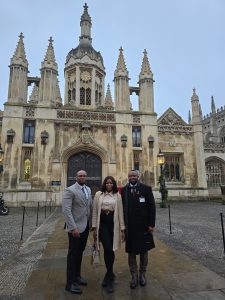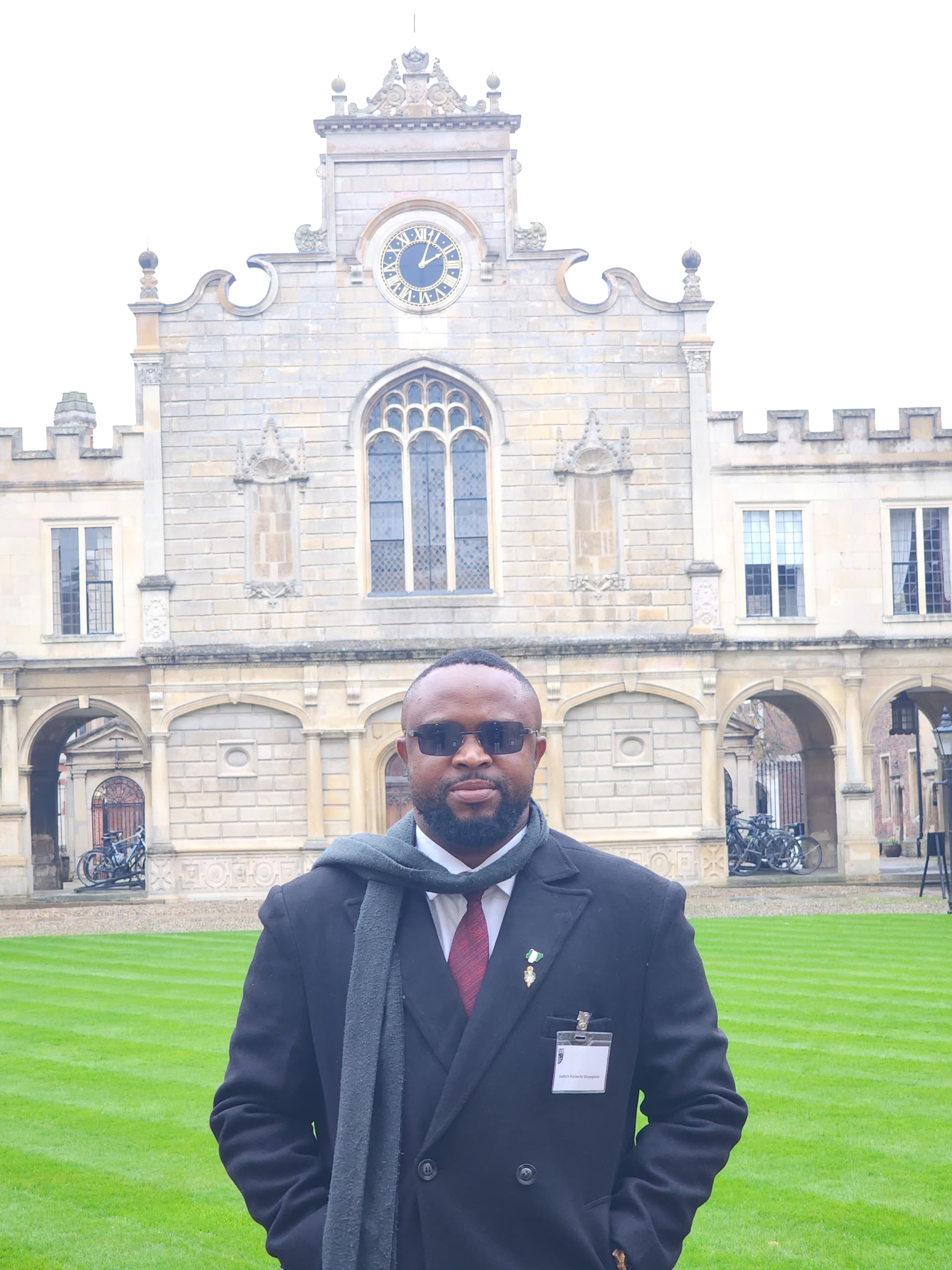
Dr. Kelechi Onyegbule, a leading Nigerian medical law expert and one of Africa’s strong voices on health law and emerging technologies, has delivered a landmark academic paper at Cambridge University, London, addressing one of the most pressing challenges in modern healthcare: algorithmic accountability and legal liability for AI-induced harm in clinical decision-making.
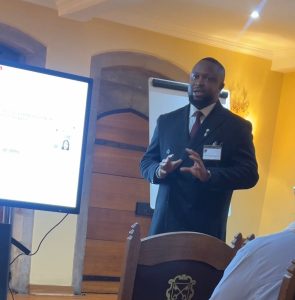
Speaking at a high-level academic forum hosted by the University of Cambridge, Dr. Onyegbule’s paper, titled “Algorithmic Accountability in Medicine: Legal Liability for AI-Induced Harm in Clinical Decision-Making,” examined the growing use of artificial intelligence in healthcare and the profound legal, ethical, and regulatory questions it raises for patient safety, professional responsibility, and human rights.
Dr. Onyegbule currently serves as Head of the Department of Public and Private Law at Alex Ekwueme Federal University, Ebonyi State, where he has distinguished himself as a scholar at the intersection of law, medicine, and public policy. He is also the Founder of Leeds Legal, a law and policy advisory platform with a strong focus on medical law, patient rights, and healthcare governance.
In his Cambridge presentation, Dr. Onyegbule interrogated the opacity of AI-driven clinical tools, the redistribution of responsibility between clinicians, developers, and institutions, and the inadequacy of traditional fault-based liability models in addressing harms arising from autonomous or semi-autonomous medical systems. He argued for a more nuanced accountability framework that balances innovation with patient protection, particularly in high-risk medical contexts such as diagnostics, triage, and treatment recommendations.
Beyond academia, Dr. Onyegbule is widely recognised for his practical engagement with medical justice and health systems reform in Africa. He is an Associate Fellow of the Institute of Medical and Health Law, a globally respected body advancing research and policy in health law, and serves as the Director of Training and Programmes for the African Association of Medical Law Practitioners, where he leads capacity-building initiatives for lawyers, doctors, regulators, and policymakers across the continent. In addition to his academic and professional roles, Dr. Onyegbule is the Secretary of the Patients Trauma Relief and Rights Advocacy Initiative (PATRRAi), a civil society organisation actively engaged in addressing patient detention, medical abuse, and rights violations within healthcare settings. Through this platform, he has combined scholarship with practical advocacy, mediation, and policy engagement.
His work consistently bridges theory and practice, combining scholarly research with advocacy on patient rights, ethical medical practice, and institutional accountability. In Nigeria and beyond, Dr. Onyegbule has been a vocal critic of unlawful patient detention, medical negligence, and systemic failures in healthcare delivery, while also engaging constructively with hospitals and regulators to promote reform and mediation.
Observers note that his Cambridge presentation places him among a growing but still select group of Global South scholars shaping international discourse on AI regulation in healthcare, an area increasingly attracting the attention of governments, courts, and international organizations. As artificial intelligence becomes embedded in clinical decision-making worldwide, voices like Dr. Onyegbule’s are seen as critical in ensuring that technological advancement does not outpace legal safeguards and ethical responsibility.
With a rapidly expanding international profile, Dr. Onyegbule represents a new generation of African legal scholars whose work resonates far beyond national borders, bringing African perspectives into global debates on technology, law, and the future of medicine.